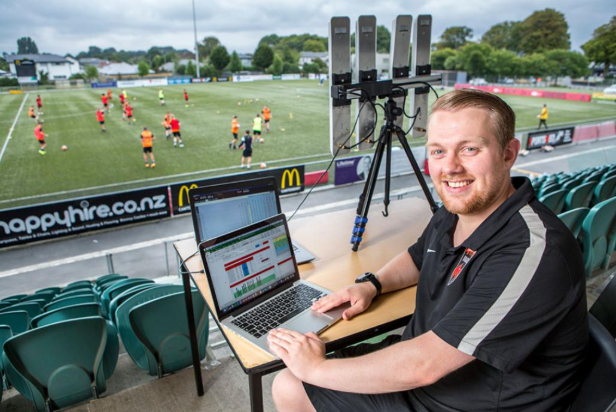
The Intersection of Excellence: Sports Analytics for Students and Data Literacy in Academics

In the competitive landscapes of both the stadium and the classroom, the margin between a win and a loss is increasingly defined by the ability to interpret complex datasets. Sports analytics for students is no longer just a hobby for fantasy league enthusiasts; it has become a premier gateway for developing high-level data literacy in academics. Whether a student is calculating the win probability of a late-game drive or structuring a systematic review for a thesis, the underlying cognitive architecture remains the same: the rigorous application of research to predict and produce success.
The Rise of the Data-Driven Student
Success in the 2020s is rarely a product of mere intuition. In the professional world, sports organizations now leverage advanced machine learning—with models like Extreme Learning Machines (ELMs) achieving up to 99.8% accuracy in predicting performance outcomes (Source: ResearchGate, 2025). This same precision is being mirrored in education. Data literacy in academics allows students to move beyond passive absorption of facts and toward “thinking with data,” a skill that identifies latent patterns in everything from historical trends to organic chemistry reactions.
However, the path to mastering these analytical skills is demanding. When the cognitive load of balancing high-level research and athletic commitments becomes overwhelming, many students seek out a cheap essay writing service to manage the structural heavy lifting of their assignments. This strategic delegation allows them to focus their mental energy on the core data analysis and synthesis that truly drives their academic and professional growth.
How Sports Data Improves Critical Thinking
One of the most compelling arguments for integrating athletics and academics is how sports data improves critical thinking. When students engage with “Sabermetrics” or player efficiency ratings, they aren’t just looking at numbers; they are engaging in a sophisticated form of inquiry.
1. Variable Isolation
In sports, an analyst must determine if a player’s slump is due to fatigue, injury, or a change in defensive scheme. This mirrors the academic process of isolating independent variables in a lab report or identifying a primary cause in a historical event.
2. Probabilistic Reasoning
Unlike static facts, sports data is dynamic. It teaches students to think in terms of “expected outcomes” rather than certainties. Research shows that using sports-based case studies in statistics courses can increase student engagement and retention by over 30% compared to traditional lecture methods (Source: StatTLC, 2025).
Predictive Modeling for Research Papers: From the Field to the Library
The transition from tracking a quarterback’s completion percentage to building predictive modeling for research papers is a natural evolution for the modern student. Predictive modeling involves using historical data to forecast future events—a cornerstone of modern social science and STEM research.
For instance, a student-athlete might use regression analysis to predict their own peak performance times based on sleep and nutrition data. That same methodology can then be applied to a sociology paper to predict urban growth patterns or to an economics thesis to forecast market volatility.
“The ability of literacy and statistical reasoning is vital for students… as materials for statistical learning can be taken from their own activities, such as sports competitions and measurement tests.” — ResearchGate, 2025.
Navigating these complex models requires significant time. For those at the intersection of elite performance and rigorous study, the choice to pay for essays is often a tactical decision. By outsourcing the initial drafting of secondary research, students can dedicate their limited time to the primary data collection and the complex algorithm design required for high-impact research papers.
Analytical Skills for Student-Athletes: A Competitive Edge
Developing analytical skills for student-athletes provides a unique dual-career advantage. While only 2% of college athletes turn professional (Source: NCAA), 100% will eventually enter a job market that prizes data fluency.
| Skill Developed | Sports Application | Academic/Professional Application |
| Data Harvesting | Scouting opponent tendencies. | Literature reviews and primary research. |
| Bias Identification | Accounting for “home-field” bias. | Minimizing selection bias in experiments. |
| Iterative Testing | Adjusting game plans at halftime. | Peer review and thesis revision. |
| Visualization | Creating player performance heat maps. | Presenting data in posters and journals. |
These skills transform “jocks” into analysts and students into scholars. A case study from Clemson University (2025) found that student-athletes who engaged in analytical internships felt 88.89% more prepared for their post-grad careers, citing communication and complex problem-solving as their top growth areas.
See also: Entrenamiento Deportivo: The Ultimate Proven Guide to Boost Performance in 2025
The Shared Methodology: A Step-by-Step Guide
To achieve success in both arenas, one must follow a standardized analytical framework:
- Define the Hypothesis: What is the specific question? (e.g., “Will a 3-point heavy strategy win the game?” or “Does wealth inequality predict literacy rates?”)
- Gather Verified Data: Use reputable sources like the Bureau of Labor Statistics or ESPN Stats & Info.
- Clean the Dataset: Remove outliers and handle missing values to ensure the model isn’t skewed.
- Synthesize and Report: Communicate the findings clearly, using visualizations to make the complex simple.
FAQs
Q1. Why is sports analytics for students becoming so popular?
It provides a high-interest context for difficult subjects like math and statistics. Students are more likely to engage with data if it relates to a team or player they are passionate about.
Q2. Can analytical skills for student-athletes really improve their grades?
Yes. Studies have shown a positive correlation between the disciplined, data-driven approach used in modern athletics and improved classroom behavior, memory retention, and processing speed.
Q3. Is it ethical to use writing services while studying analytics?
Many students use these services as a “scaffolding” tool. Just as a professional analyst might use a software tool to automate data entry, a student might use a service to manage the bulk of a paper so they can focus on the critical “thought work” and data interpretation.
References
- ResearchGate (2025): “The Sport Students’ Ability of Literacy and Statistical Reasoning.”
- StatTLC (2025): “Engaging Students with Sports Data: The SCORE Network Approach.”
- MDPI (2024): “Predicting Academic Success of College Students Using Machine Learning Techniques.”
- Clemson University (2025): “Case Study of Student-Athlete Career Development and Analytical Growth.”
- World Journal of Advanced Research (2024): “Data Science in Sports Analytics: A Review of Performance Optimization.”
Author Bio
Alex Sterling is a content strategist at MyAssignmentHelp and an experienced data analyst focused on the convergence of sports science and educational technology. With a Master’s in Applied Statistics and over ten years in academic consulting, Alex empowers students and athletes to use big data insights to optimize performance both academically and athletically.